Wind turbine blades are inspected using a combination of visual inspection, drone imagery and direct access via rope access. The choice of method depends on the type of damage, the location of the turbine and whether repair is needed immediately after inspection. This article answers the most frequently asked questions about blade inspection and blade damage on wind turbines.
What types of damage most commonly occur on wind turbine blades?
The most common damage to wind turbine blades is leading edge erosion: wear on the front of the blade caused by rain, hail and dust particles striking it at high rotational speed. Lightning strikes, bird collisions, laminate cracks and surface cracks in the coating also occur regularly. On offshore turbines, salt deposits also accelerate degradation.
Leading edge erosion is the most insidious form of blade damage. It starts as small pits in the coating and, if left untreated, develops into deep craters in the laminate. This increases drag, reduces energy yield and raises the risk of further structural damage. Timely repair with tape or a specialised coating is effective and considerably cheaper than a full tip replacement.
Lightning strikes are another common cause of blade damage, especially for turbines in open terrain or offshore. A strike can damage or even burn through the lightning protection system in the blade, which requires immediate inspection and repair. A bird collision usually leaves visible dent damage on the leading edge or the blade surface. Laminate cracks and delamination are less visible from the outside and require a more precise inspection at closer range.
What methods are used to inspect wind turbine blades?
Wind turbine blades are inspected using three main methods: visual inspection from the ground with binoculars or a camera, drone inspection for a detailed view from a distance, and direct inspection via rope access, in which a technician assesses the blade up close. Each method has its own area of application and level of accuracy.
Ground-based visual inspection
A ground-based inspection with a high-quality camera or binoculars is quick and inexpensive, but offers limited resolution. Large cracks, severe leading edge erosion and visible laminate damage can be detected, but subtle surface defects or internal delamination remain out of view. This method is often used as an initial screening.
Drone inspection
A drone flies close to the blade and captures high-resolution images or thermal imagery. This provides more detail than a ground-based inspection and can be deployed relatively quickly. The limitations lie in image interpretation: a drone can flag a defect, but cannot always accurately determine the severity or depth of the damage without further assessment.
Rope access blade inspection
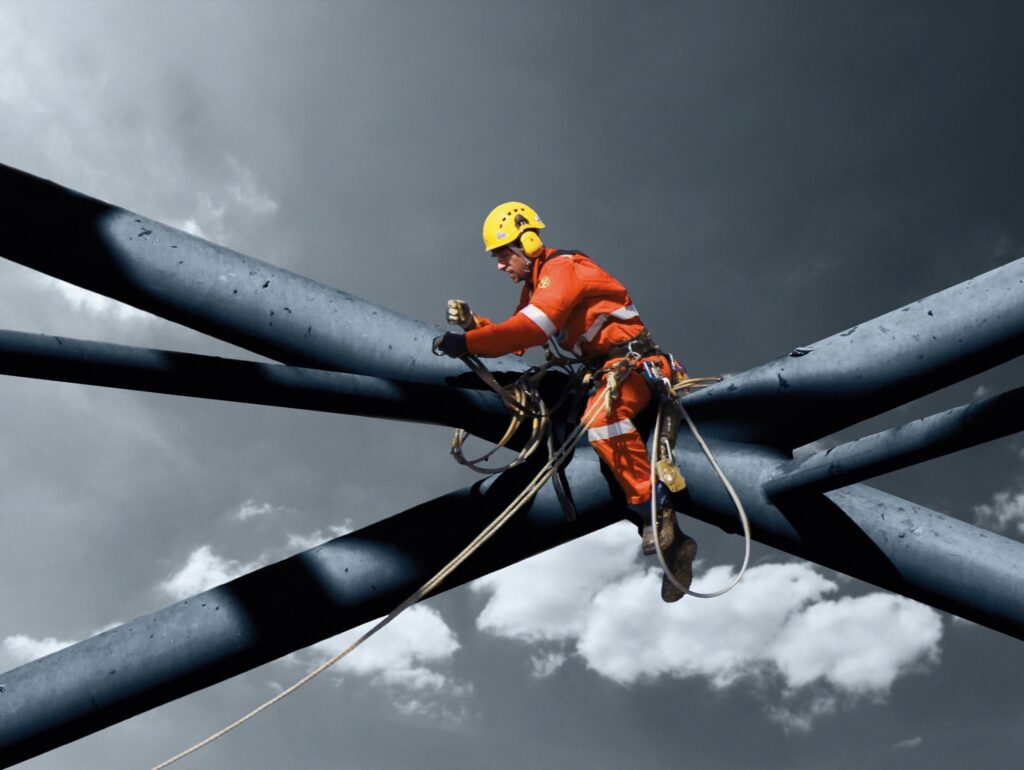
With rope access, a certified technician descends along the blade and assesses the damage from a distance of just centimetres. This is the most accurate form of inspection: the technician can feel the surface, judge the depth of cracks and immediately determine which repair method is needed. An additional advantage is that minor repairs can be carried out during the same deployment, which avoids a second mobilisation.
How accurate is a drone inspection of wind turbine blades?
A drone inspection is more accurate than a ground-based visual inspection, but less accurate than a direct inspection via rope access. Drones are effective for detecting visible surface damage such as leading edge erosion, cracks in the coating and bird collision damage. They are less suitable for assessing the severity of internal damage or delamination.
The accuracy of a drone inspection depends heavily on image quality, the flying distance from the blade and the weather conditions. In strong wind or limited visibility, reliability drops quickly. Thermal cameras can reveal temperature differences in the laminate, which indicates moisture ingress or delamination, but this requires specialised interpretation.
A practical bottleneck is that a drone can only observe: it cannot carry out repairs. As soon as a drone identifies damage that requires action, a technician still has to come on site. Combining inspection and repair in a single deployment via rope access avoids a separate mobilisation and thereby saves time and costs. This is one of the reasons why specialised companies in the wind energy sector increasingly combine inspection and repair in a single visit.
What are the advantages of rope access for blade inspections?
Rope access offers three concrete advantages over other methods for blade inspections: maximum accuracy through direct visual and tactile assessment, the ability to combine inspection and repair in a single deployment, and a minimal footprint without heavy equipment or crane vessels. This makes rope access particularly suitable for both onshore and offshore wind turbines.
During a rope access blade inspection, the technician descends along the blade and assesses every section up close. Leading edge erosion, cracks in the laminate, damage to the lightning protection system and surface damage are identified and documented on the spot. Minor repairs, such as applying tape or coating against leading edge erosion, can be carried out at the same time. This prevents the turbine from standing idle longer than necessary.
For offshore wind turbines, the cost efficiency of rope access is particularly relevant. Deploying a crane vessel for blade repairs costs considerably more than a rope access team. For this purpose, Sky-Access has developed a patented modular blade platform that is built up around the blade and delivered to the turbine using the hoisting equipment already present. This system makes major repairs and tip replacements offshore possible, saving more than €100,000 per deployment compared to a crane vessel.
Safety is another argument. Sky-Access operates as an IRATA-certified company, with an IRATA level 3 supervisor mandatorily present on every job. Statistically, rope access has the lowest incident rate of all methods for working at height, which is a decisive criterion for HSE managers at wind farm operators.
How often should wind turbine blades be inspected?
In most cases, wind turbine blades are inspected at least once a year. Depending on the age of the turbine, its location and operational load, a higher inspection frequency may be necessary. Offshore turbines and turbines in areas with heavy rainfall, hail or a salty environment usually require more frequent checks.
Many wind farm operators use an annual blade inspection as a baseline standard, supplemented by targeted inspections after extreme weather conditions such as hailstorms or severe lightning strikes. As turbines age and the likelihood of leading edge erosion and laminate fatigue increases, a higher inspection frequency becomes economically justified: early intervention is considerably cheaper than repairing advanced structural damage.
In addition to periodic inspection, contractual obligations also play a role. OEM warranty conditions and O&M contracts often set minimum requirements for inspection frequency and documentation. A certified inspection with thorough reporting is then not only operationally sensible, but also contractually required.
What happens if blade damage is not detected in time?
Undetected blade damage escalates quickly: what begins as surface erosion or a small crack can develop into structural delamination or laminate failure. In the worst case, this leads to the loss of a blade or a tip replacement, which entails considerably higher repair costs than early intervention. In addition, energy yield declines as the blade geometry deteriorates.
Leading edge erosion is the clearest example of this. A damaged blade profile increases drag and reduces aerodynamic efficiency. This translates directly into less energy production per operating hour. The longer the erosion remains untreated, the greater the production loss and the more extensive the eventual repair.
Moisture ingress through untreated cracks is another risk. Water that penetrates the laminate can expand in frost and cause delamination. This is a progressive process that is hard to see from the outside and that can be missed during an annual inspection without direct blade assessment. Thermal drone inspection or direct rope access inspection are then the appropriate methods for detecting moisture ingress in time.
From an operational perspective, every day a turbine stands idle for repair costs direct revenue. Small damage that is discovered in time can be repaired on the spot during a regular blade inspection via rope access. A large repair project or tip replacement requires a separate mobilisation, more people on site and a longer downtime period. For wind farm operators who want to minimise downtime, preventive inspection is therefore not a cost item but an investment. More information about Sky-Access's approach in the wind energy sector can be found on the page about the company's working methods and certifications.
Related Articles
- What Does Industrial Maintenance at Height Cost on Average?
- Why is a multidisciplinary team more efficient for maintenance at height?
- How Is Maintenance Carried Out on Hard-to-Reach Industrial Installations?
- How do you know if a maintenance company has the right certifications?
- Sky-Access at great heights: innovative access solutions for the Euromast in Rotterdam

 NL
 EN